Fare evasion and moral preening
A couple of days ago, I was waiting for my wife at a T stop near our house. During the ten or so minutes I was there, I saw some dozen people enter through the gates. At least seven of them did not pay (I only started counting after a while, so the number is not precise). It was casual, expected behavior. From the appearance of most of these people, it wasn’t a matter of finding the fare a financial burden. It was a matter of being an entitled jerk.
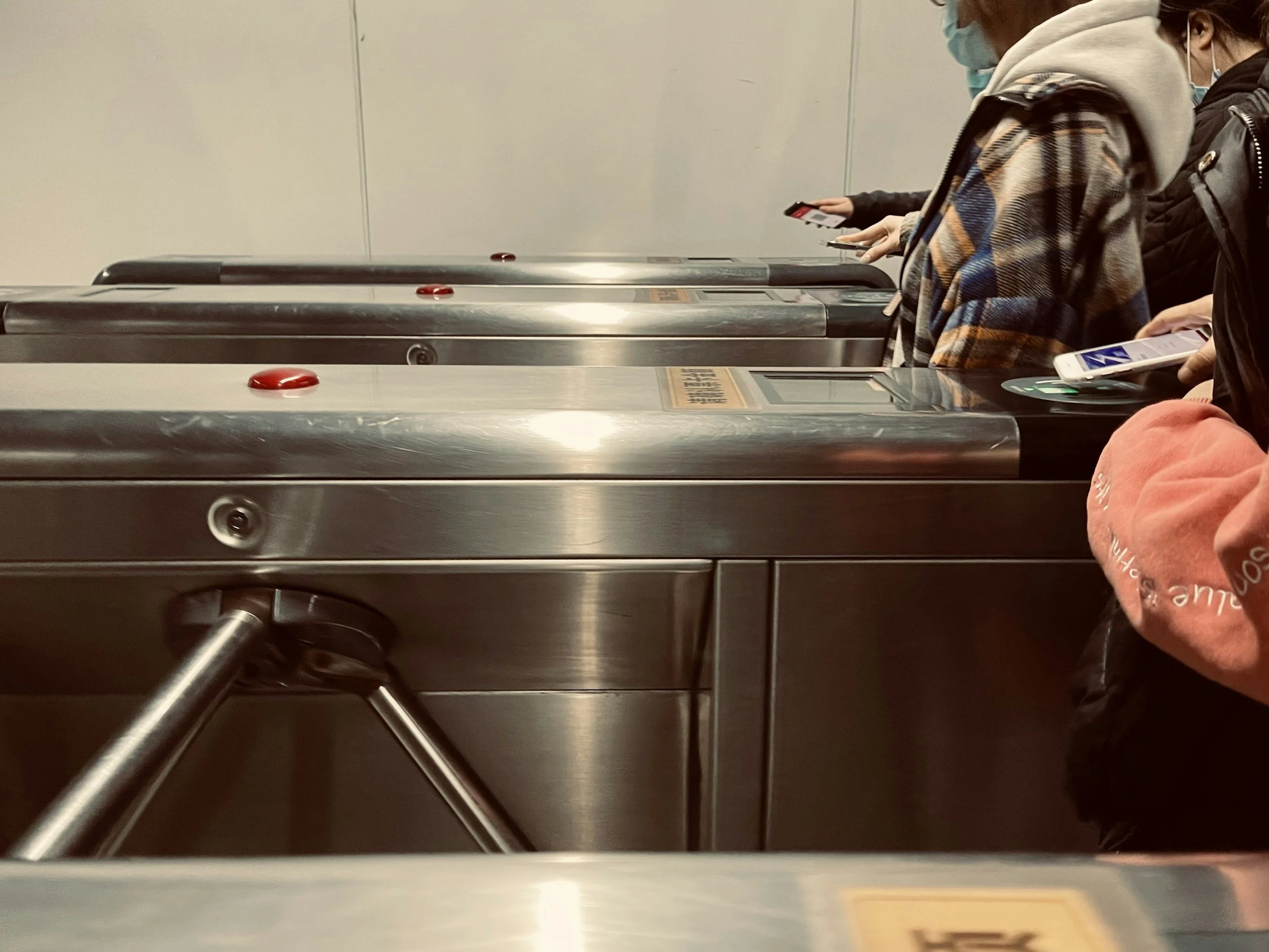
Some chumps paying their fares
That entrance is a bit isolated from the main station, and I’ve never seen it staffed, despite there being a booth for someone. The MBTA supposedly started cracking down on fare evasion back in September, first warning people, then fining them. All I can say is, I think you could fund a few more fare enforcers on that station alone.
Now, fare evasion is as old as fares. The New York Transit Museum has an extensive display of turnstiles from throughout its history, and all got circumvented, jammed with slugs, or broken. This isn’t some kind of recent moral breakdown.
Still, it is always annoying if you are someone who has a sense of the duties we have to our fellow citizens.
An illustrative anecdote about fare evasion
For example, in Fare Share, a post on Addison del Mastro's Substack The Deleted Scenes, del Mastro describes an encounter he had at a housing conference. They got to discussing fare evasion, and one of his dinner companions
…said that when he rides the subway, he hops the turnstile whenever possible. He described it as a sort of gesture of solidarity with the poor. Nobody should have to pay, and since I have a choice, I’ll choose to throw my lot in with the poor turnstile-jumpers. (I don’t really think I’m exaggerating, but I wish I was.)
He then went on to say that for one of his previous jobs he had a monthly pre-loaded MTA card—in other words, his employer paid for his transit commute—and he still jumped the turnstile, “as a matter of principle.”
What principle is that, exactly? I asked him.
Del Mastro was just as irritated by this guy as I would have been. This isn't a principle, this is a pose. This isn't an attempt, even an inadequate attempt, to help anyone. It's a way of feeling like you're the kind of person who helps the poor, without actually needing to do anything.
How evading responsibility can provide a feeling of virtue
I think it's the "not needing to do anything" that is essential to the pose a lot of people strike. Is there a housing shortage? Compel developers to put unprofitable units in their multifamily buildings, so that we can provide "affordable" housing without paying anything. Are rents too high? Compel landlords to provide housing at a lower price. Public transit doesn't work well and is unpopular? Well, at least make it free, without any need to do serious work on improving service.
It also gives you a clear, definable, tweetable thing to point to. Reduced dwell times? A more comforting experience for a nervous woman or child traveling alone? Better on-time performance for someone whose pay gets docked if they're a couple of minutes late, so they don't have to take the bus that's half an hour early just to make sure? Too fuzzy, too dull, too down in the weeds. Those people are kind of boring, anyway. Not cool, like people who are dishonest or violent.
As you can tell, I can probably be defined as a “pro-public-order leftist” who feels that everyone benefits from public order, particularly those that progressives claim they are most devoted to. So, kind of a scold.
Besides paying your fare, return your shopping cart
But those people are always and everywhere with us, as Why Don’t People Return Their Shopping Carts? A (Somewhat) Scientific Investigation demonstrates. So those people evading the fare on the T were unlikely to have been making some kind of point. They were just self-centered jerks who didn’t think the rules applied to them.